



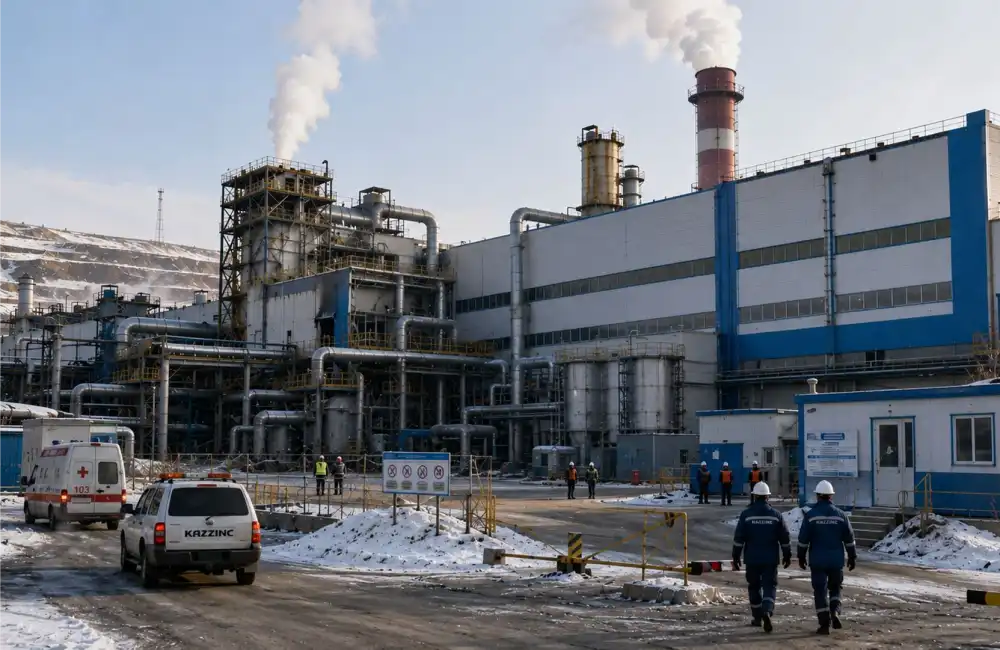

A deadly explosion has struck the Kazzinc metallurgical complex in eastern Kazakhstan, one of the world’s major zinc production facilities and a key asset owned by global mining giant Glencore.
The incident occurred on Tuesday morning at the company’s zinc smelting operation in Ust-Kamenogorsk, triggering a large fire, a partial structural collapse and a major emergency response.
According to Kazakhstan’s emergency services ministry, two workers were killed and five others injured following the blast, which reportedly originated in a dust collection system within the electrolysis and smelting section of the plant. Authorities stated that the explosion occurred while maintenance crews were carrying out cleaning work on a smoke extraction unit.
Fire and Structural Collapse
The explosion caused a fire covering approximately 120 square metres before emergency crews managed to bring the situation under control. Officials also confirmed that part of the building structure collapsed during the incident, complicating rescue operations as emergency personnel and search teams worked through damaged sections of the facility.
Footage circulating on local media and social platforms showed blackened industrial infrastructure, smoke rising from the site and rescue workers searching through debris with specialised equipment and dogs. Authorities later confirmed that the fire had been extinguished and that the situation was contained.
Glencore Responds
Glencore, which owns a 70% stake in Kazzinc, released a statement expressing condolences to the families of those affected and confirming that efforts were focused on supporting injured workers and stabilising operations at the facility. The company also stated that air quality monitoring conducted following the explosion showed “no impact on the environment.”
Kazzinc is Kazakhstan’s largest producer of zinc and also produces significant volumes of lead, copper, gold and silver. The operation is strategically important both to Kazakhstan’s industrial sector and to Glencore’s global metals portfolio. Kazakhstan’s sovereign wealth fund, Samruk-Kazyna, retains the remaining 30% ownership stake in the business.
Questions Over Industrial Safety
Early reports suggest the blast may have been linked to combustible dust accumulation inside the extraction and filtration system. Industrial safety experts have long warned that metallurgical facilities handling fine zinc and sulphur-based particulates face elevated explosion risks if ventilation, cleaning and ignition-control procedures are not strictly maintained.
The East Kazakhstan regional administration has ordered a formal investigation into the cause of the explosion and announced that oversight of safety compliance at the facility would be strengthened. Authorities are also assessing whether parts of the production cycle can safely continue while the investigation remains ongoing.
Potential Impact on Zinc Markets
The incident has raised concerns across commodity markets given Kazzinc’s importance to global zinc supply. The company produced approximately 212,000 tonnes of zinc and more than 543,000 ounces of gold last year, generating over $5 billion in annual revenue according to Glencore’s latest filings.
Analysts are now closely watching for any disruption to output, particularly at a time when global industrial metals markets remain sensitive to supply chain instability and geopolitical risk. Zinc prices moved slightly higher in early trading following reports of the explosion, though the longer-term impact will depend on the extent of operational disruption and the findings of the investigation.
Sale Plans Complicated
The timing of the explosion may also complicate Glencore’s reported efforts to divest its majority stake in Kazzinc. Earlier this year, reports emerged that the mining group had entered discussions regarding a potential sale of the business to Kazakh investors. Industry observers suggest that any transaction could now face additional scrutiny over operational safety, regulatory compliance and future liabilities connected to the plant.
For now, production assessments and the official investigation remain underway as Kazakhstan’s mining sector reacts to one of the country’s most serious industrial accidents in recent years.